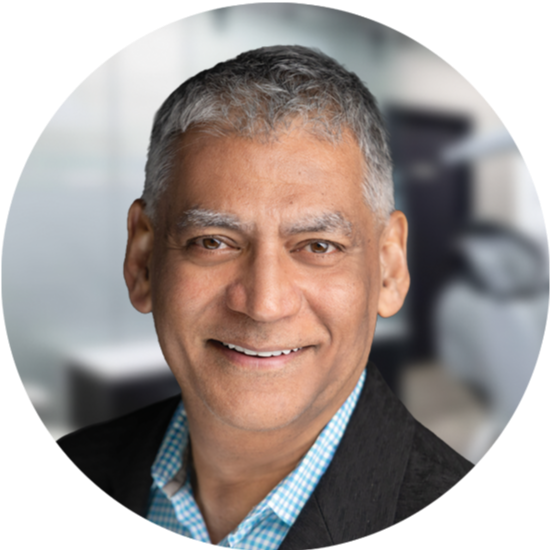
Paresh Shah
DMD, MS
The Modern Veneer Workflow — Direct, Printed or Porcelain: Choosing the Right Path for Every Patient
DAY 2 - Friday, January 15 | 8:00AM - 10:00AM | 2 CE Credits
About Dr. Shah
Dr. Paresh Shah maintains a private practice in Winnipeg, Canada with a focus on implants, aesthetics and interdisciplinary care. His clinic, Revive Dental at Westwood integrates cutting-edge digital technology to provide personalized treatments. He also serves as a founder and co-director of Two Rivers Dental Study Club, a Seattle Study Club affiliate in Winnipeg.
Dr. Shah holds a Master’s degree in Physiology (1987) and graduated from the Dr. Gerald Niznick College of Dentistry in 1991. He has a GPR from the University of Manitoba in 1992 and Certificate of Proficiency in Esthetic Dentistry from the University of Buffalo (SUNY) in 2007. He is also a graduate of Misch Implant Institute and the Kois Center in Seattle. Dr. Shah has previously served as adjunct faculty at Arthur A. Dugoni School of Dentistry (UOP) & Dr. Gerald Niznick College of Dentistry (Manitoba).
He serves as a key opinion leader for several dental manufacturers. He has used digital technology in his practice for over 18 years. Dr. Shah has been invited to give over 500 lectures globally on all aspects of restorative, interdisciplinary care and digital dentistry. He has written a textbook called Beyond the Single Tooth - Treatment Planning for Whole Mouth Dentistry.
Course Outline
Smile design has entered a new era. No longer limited to traditional porcelain veneers, today’s clinicians have multiple pathways to deliver esthetic outcomes—ranging from additive direct composite techniques to digitally designed and 3D printed restorations.
This program explores the evolving spectrum of veneer therapy and how to select the right approach based on biology, function, esthetics, and patient expectations. Through clinical cases and workflows, participants will learn how to plan and execute veneers using three approaches: direct composite, printed resin, and porcelain.
Emphasis is placed on minimally invasive philosophies, digital planning, material selection, and communication with laboratory partners. Clinicians will leave with a practical framework to expand treatment options and deliver highly esthetic, predictable results.
Learning Objectives
- Understand the indications, advantages, and limitations of direct composite, printed, and porcelain veneers
- Apply minimally invasive and additive treatment philosophies
- Develop workflows using digital smile design and diagnostic wax-ups
- Compare composite layering techniques and injection molding approaches
- Understand the clinical role of printed veneers as a mid-tier option
- Select materials based on esthetic demands and functional requirements
- Utilize matrices, mock-ups, and provisionals effectively
- Enhance communication with laboratory technicians for predictable outcomes